

Cultivating an exterior that you can be proud of is no easy feat, and it’s something you should protect at all costs. From shielding against harsh sunlight to heavy rains and cold winters, there are plenty of smart ways to weatherproof your exterior. These proactive measures can enhance both the aesthetic appeal and functional resilience of your home. Read on for some of our best tips on how to weatherproof your home exterior to foster longevity and structural integrity.
If your design goals are small and simple, we’ve got you covered. If you’re dreaming of a total home makeover with massive changes on your mind, we’re still your go-to. Our designers are here to help no matter how big or small your exterior project may be. Learn more about what we do.
Our designers only use and recommend products that we know, love, or would use on our own properties. When you buy through our links, we may earn a commission, at no cost to you.

#1 // Use fire-resistant cladding
When it comes to exterior cladding, certain materials hold up against fire better than others. This client requested we use materials that are both eco-friendly and fire-resistant. Our designers recommended a combination of stucco, stone, and James Hardie siding panels — a solid trio to weatherproof with. We also used natural materials like stone and wood for accents throughout the design.

#2 // Focus on the roof
If you’re looking to weatherproof your home, it’s important to be thoughtful about your roof since certain extreme weather can destroy your roof, leaving you with detrimental damage. This client’s home is located in an area prone to wildfires, so they requested a fire-resistant roof. We recommended shingles that stand up against the elements, including fire, wind, and algae.
Our designers also added a copper awning above the garage, providing additional protection from the elements, especially rain. The copper material is also fire-resistant.

#3 // Door awnings for coverage
To weatherproof your entryway or garage, consider implementing awnings. In this design, the front door is nestled in its own little nook, capped with an awning to protect the space from the elements. Our designers followed suit for the garage doors, mounting a protruding awning above them. These overhangs effectively protect the doors and their immediate surroundings from rain, snow, and harsh sunlight, reducing exposure to moisture and UV rays that can cause damage over time.
By providing a barrier against inclement weather, door awnings maintain the integrity of the entryway, preventing water seepage and potential rotting of door frames or thresholds. Plus, they contribute to energy efficiency by reducing heat gain in the summer and minimizing heat loss during colder months.

#4 // Try a deep overhanging roof
Similar to how door awnings weatherproof the spaces beneath the awning, deep overhanging roofs provide protection from the elements. Overhanging roofs, however, can offer protection to more real estate than awnings. Because the roof in this design features multiple, layered overhangs, there is plenty of protection from precipitation and excessive sunlight. Aesthetically, the design of the roof creates a multi-dimensional façade, achieving a contemporary appeal.
Our designers also covered the entry and used permeable pavers nearby to prevent slippage. We especially appreciate how the staggered layout of the roof’s architecture creates even more of a detour for rain and other elements.

#5 // Prevent flooding with permeable pavers
As we briefly mentioned earlier, permeable pavers are a great element to implement if you’re looking to weatherproof your exterior. These specially designed pavers feature gaps or porous materials that allow rainwater to infiltrate the ground rather than pooling on the surface. By promoting natural drainage, permeable pavers help prevent water from accumulating around your home’s foundation, which can lead to water damage and erosion over time.
In this design, we filled the space of the yard that joins the driveway and porch steps with permeable pavers. This proactive approach not only protects against potential flooding but also prevents slippage without having to walk directly on the grass. Permeable pavers also contribute to sustainable landscaping practices by replenishing groundwater while supporting plant growth.
#6 // Protect your porch
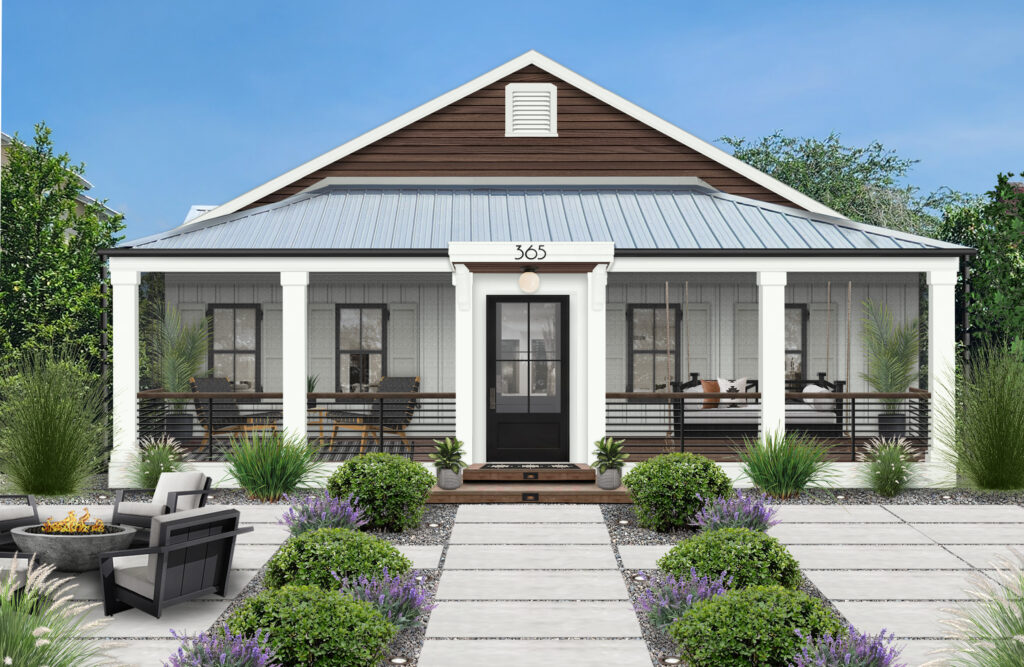
Sometimes simply covering your porch is not enough to fully weatherproof it. After all, wind can blow sideways, welcoming all kinds of elements to your outdoor space. Consider a screened-in porch if you want an added layer of weather protection. The screen will still allow the fresh air to flow through and it won’t hinder your view of your yard too much either. All the while, you’ll be able to enjoy another barrier between you and the unpredictable reach of Mother Nature.

#7 // Use a weather-resistant storm door
Protect the gateway between your exterior and the inside of your home with a weather-resistant storm door. Our designers recommended this frosted fiberglass front door. If you’ve been wondering how to weatherpoof an exterior door, finding a door with a frame designed to stack up against the elements is paramount. The frame on this door is waterproof, and the fiberglass panels are both rot-resistant and able to stand up against extreme weather conditions.
As an added bonus, this front door is Energy Star qualified, so it can help bring down your energy bill too. One of our designers’ favorite things to do at brick&batten is create designs that marry function and aesthetics. The sleek, modern look of this door, along with its abundant weatherproof highlights, does just that.

#8 // Bahama shutters for storm protection
Bahama shutters are ideal to weatherproof your home with, offering both functionality and aesthetic appeal. These shutters are hinged at the top and can be easily adjusted to provide shade from the sun or protection against inclement weather such as wind and rain. By shading windows and doors, Bahama shutters help regulate indoor temperatures, reducing the heat gain during hot months and providing insulation against cold drafts in winter. They also serve as a barrier against flying debris during storms, enhancing the structural integrity of your windows and preventing potential damage.
Beyond their practical benefits, the Bahama shutters in this design add a distinctive tropical flair to the aesthetic. Elevating that tropical vibe, we rendered the shutters in Benjamin Moore’s Palladian Blue — a soft, beachy blue hue.

#9 // Support soil with a retaining wall
Retaining walls are important for reducing soil erosion and enhancing drainage. These walls are typically constructed from durable materials like concrete, stone, or wood and are strategically placed to hold back soil on slopes or uneven terrain. Here, we filled in the sloped front yard with layered retaining walls. To make the walls appear more seamless, we integrated them among the steps that lead from the curb to the front gate.
We also used the retaining walls as an opportunity to infuse the yard with landscaping. The combination of the layered walls and the mix of plants gives this design dynamic texture. By stabilizing the ground, the retaining walls prevent rainwater runoff from washing away soil, which can undermine the foundation of your home and lead to water damage. They also help control moisture levels, reducing the risk of flooding and soil saturation during heavy rainfalls.

#10 // Go for gutters
Gutters are one of the most practical ways to weatherproof your home. By efficiently directing rainwater away from the foundation of your home, gutters prevent water damage. Just make sure you keep them cleaned out so they can function properly. Installed along the eaves of the roof, the copper gutters in this design collect rain runoff and channel it through downspouts away from the house. This system prevents soil erosion around the foundation, minimizing the risk of structural damage caused by water seepage.
Gutters are also a tool for aesthetics. For this modern farmhouse, the copper gutters blend well with the light wood accents and cedar shake siding on the upper level.

Help your home weather the storms
Weatherproofing your home exterior is not only about protecting your investment but also about creating a more sustainable and comfortable living environment. By implementing the right strategies — whether it’s installing gutters to manage rainwater, adding Bahama shutters for shade and storm protection, or constructing retaining walls to prevent soil erosion — you can significantly enhance the resilience of your property. And the best part is, you don’t have to go at it alone — our designers are here to help!


